


Daily Crypto News | Tuesday, November 10, 2026
Bitcoin is struggling to hold $74,000, institutional investors are continuing to pull money out of Bitcoin ETFs, and Ethereum is taking an even bigger beating.
Meanwhile, Nvidia’s controversy involving CEO Jensen Huang has opened a much larger debate about national security, American technological dominance, and whether private companies should be allowed to sell their most advanced technology to countries like China.
And with Democrats preparing to exercise greater influence over financial regulation, the cryptocurrency industry may soon discover that being labeled “pro-crypto” in Congress doesn’t necessarily mean much when it’s time to vote.
1. Bitcoin Slips Below $74,000 as ETF Outflows Continue

Bitcoin briefly held around $74,000 before slipping to approximately $73,901 during Tuesday’s recording.
U.S. spot Bitcoin ETFs reportedly lost another $201 million, adding to nearly $1.3 billion in outflows from the previous week.
That’s approximately $1.5 billion leaving these investment products in a relatively short period.
But I’m not convinced this is entirely about investors losing confidence in Bitcoin.
We’re approaching year-end, when institutional investors rebalance portfolios, harvest tax losses, and reconsider their exposure to risk.
We’re also coming out of an election that significantly changed the political landscape in Washington.
Higher bond yields, alternative sources of investment income, and uncertainty about cryptocurrency regulation could all be influencing these decisions.
The important question is whether we’re witnessing a temporary portfolio adjustment or a more fundamental change in institutional appetite for Bitcoin.
2. MARA Sells 13,597 Bitcoin to Repay Approximately $750 Million in Debt

Bitcoin miner MARA reportedly sold approximately 13,597 BTC to repay roughly three-quarters of a billion dollars in debt.
The company also announced a $50 million share repurchase program.
It’s an interesting combination: selling Bitcoin to reduce debt while simultaneously authorizing purchases of its own stock.
But the bigger story is what this tells us about the mining industry.
For years, the prevailing strategy among major Bitcoin miners was to accumulate as much Bitcoin as possible.
Now some operators are increasingly focused on debt management, balance-sheet flexibility, and infrastructure investment.
AI data centers are becoming an important part of that conversation.
Mining companies already control power infrastructure, facilities, and land that could potentially support high-performance computing.
The question is whether selling Bitcoin today to strengthen the business will prove more valuable than continuing to hold it.
3. Nvidia’s Jensen Huang Investigation Raises Questions About Chinese Intelligence

Nvidia CEO Jensen Huang remains under scrutiny following allegations involving a personal relationship with Alice Huang, a businesswoman reportedly associated with Megaspeed and companies involved in advanced AI technology.
The allegations have prompted questions about whether foreign intelligence operations attempted to gain access to sensitive American technology.
Nvidia says it has no reason to believe its proprietary information or national security was compromised. China denies the espionage allegations.
The claims remain allegations, not established findings.
But here’s where I think the public conversation is missing the point.
Everybody wants to turn this into a cheating scandal.
I don’t care about Jensen Huang’s personal relationships. What matters is whether sensitive American technology or information was exposed.
If there was an intelligence operation targeting the CEO of one of the world’s most important AI companies, that’s a national security issue.
The investigation needs to establish what happened rather than allowing gossip to overwhelm the actual questions.
4. Should Washington Control Who Nvidia Can Sell AI Chips To?

The Nvidia controversy raises a much bigger question: Should the U.S. government have the authority to prevent an American company from selling its technology to another country?
Nvidia is a private business. It develops products, invests in research, and sells technology.
If China wants to purchase those products, why shouldn’t Nvidia be allowed to sell them?
There is an obvious distinction between a company developing technology independently and a defense contractor producing classified equipment under an exclusive government contract.
If the U.S. government commissions a secret military aircraft, funds its development, and restricts its use, that is one thing.
But what happens when a private company independently develops a technology that becomes strategically important?
Does the government suddenly acquire the right to determine who can purchase it?
Advanced AI chips could have enormous military applications involving autonomous weapons, intelligence gathering, drones, and warfare.
There may be legitimate national-security reasons for export restrictions.
But where do we draw the line between protecting the country and controlling private enterprise?
And if Washington can restrict AI chips, what happens when the same argument is applied to frontier AI models?
I’d genuinely like to hear what you think.
5. Nvidia Shares Fall More Than 4% as Investors Weigh the Controversy

Nvidia shares reportedly declined more than 4% Monday as investors reacted to the controversy surrounding Jensen Huang.
For a company valued in the trillions of dollars, a move of that magnitude represents an enormous change in market capitalization.
The pressure comes at a sensitive moment for the technology sector.
Investors are already questioning the extraordinary capital expenditures supporting the AI infrastructure boom.
Now Nvidia faces additional uncertainty involving leadership, national security, and potential restrictions on sales to China.
Nasdaq futures were also lower ahead of Tuesday’s opening bell.
The issue extends beyond Nvidia.
A significant decline in AI-related valuations could affect retirement savings, employment, infrastructure development, and the broader economy.
Accountability matters, but an economic collapse would not be confined to the executives and billionaires at the center of these controversies.
6. Anthropic Reportedly Targets a $1 Trillion IPO

Anthropic, the company behind Claude, is reportedly preparing for a potential initial public offering that could value the business above $1 trillion.
The company is also reportedly considering raising approximately $70 billion through the offering.
That would make it one of the largest public-market debuts in history.
Earlier speculation suggested valuations as high as $2 trillion, but the current market environment may be forcing investors and companies to reconsider expectations.
I’m particularly interested in whether retail investors will have opportunities to participate at the offering price.
Some brokerage platforms have experimented with providing allocations to individual investors before public trading begins.
If Anthropic comes to market around $1 trillion, I think there’s a possibility investors could push the valuation substantially higher.
But that is speculation, not a guarantee.
The larger question is whether the company’s eventual earnings can justify the extraordinary expectations surrounding artificial intelligence.
7. Elizabeth Warren Signals Greater Scrutiny of Crypto and Prediction Markets
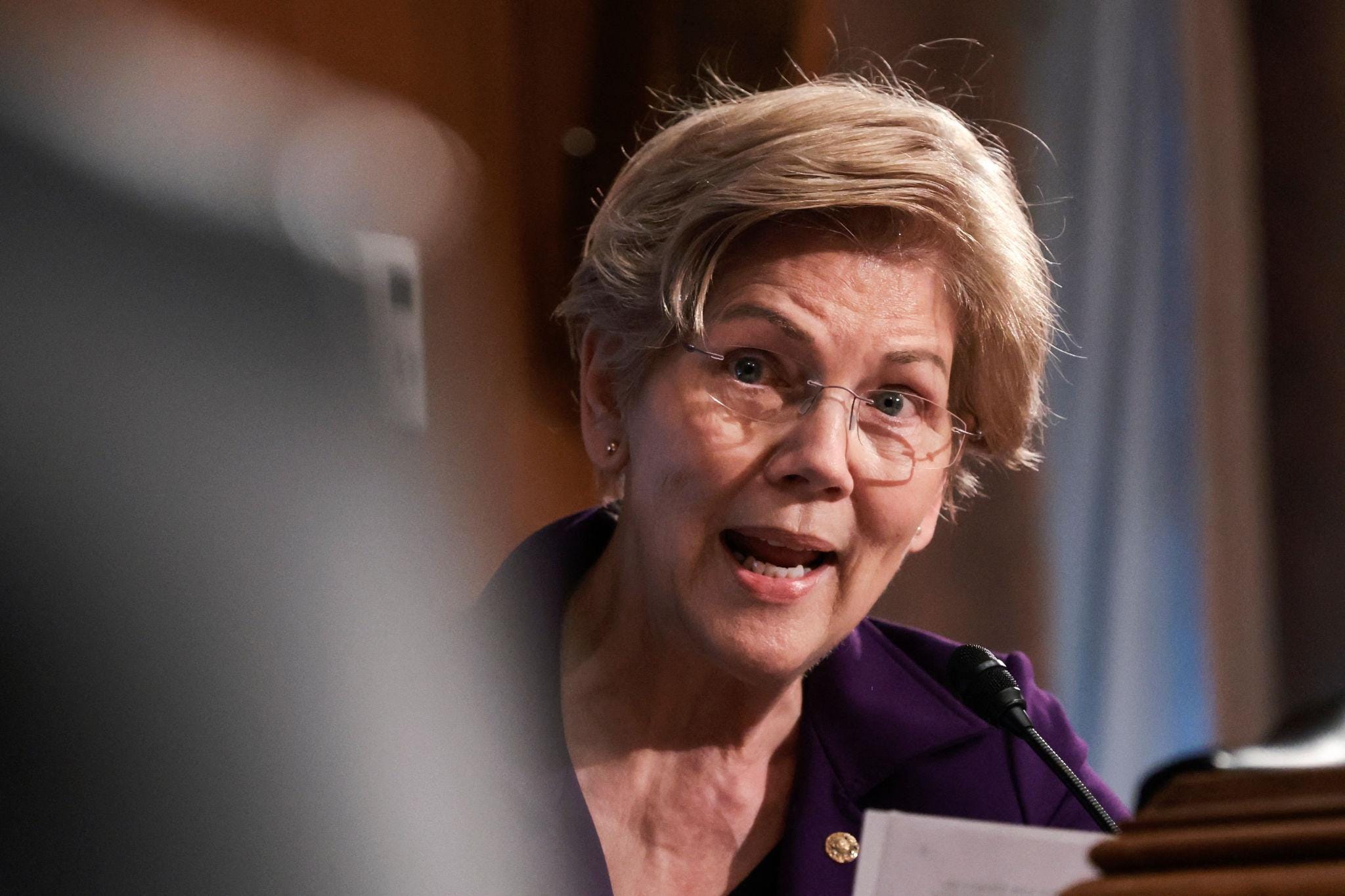
Senator Elizabeth Warren is preparing to exercise greater influence over financial regulation as Democrats move into positions of congressional leadership.
Warren has signaled additional scrutiny of cryptocurrency businesses, prediction markets, and financial activities connected to President Donald Trump.
Companies such as Polymarket and Kalshi could face greater political and regulatory attention.
I don’t have a problem investigating conflicts of interest involving Trump or anyone else in government.
But I want the same standards applied to everybody.
Congressional stock trading should end. Executive-branch officials should face meaningful restrictions on trading and financial conflicts.
I’d go further than blind trusts.
Officials could hold diversified index funds, Treasury securities, or retain existing investments without trading them during their time in office.
What worries me is whether investigations into legitimate conflicts will become an excuse to impose sweeping restrictions on cryptocurrency businesses.
And I remain concerned that traditional banks will receive protection while competing products, including stablecoin yield, face additional limitations.
8. Crypto Industry Claims 241 Pro-Crypto House Members, but Will They Actually Vote That Way?
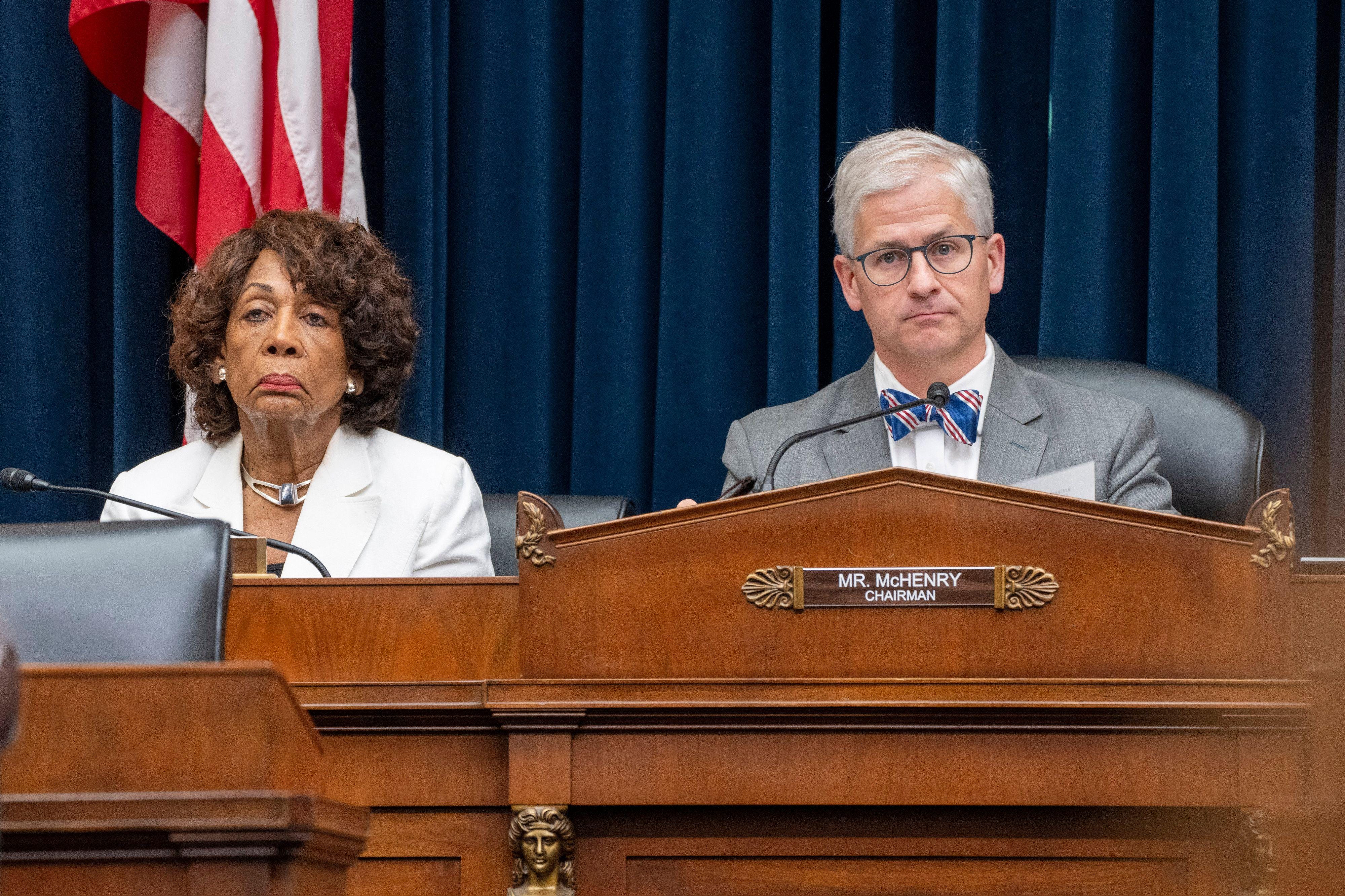
An industry election tracker cited in the episode identifies 241 incoming House members as supportive of cryptocurrency, compared with 106 classified as opposed.
The Senate presents a different challenge, with approximately 50 senators classified as pro-crypto, below the 60 votes generally required to overcome a filibuster.
Those numbers sound encouraging.
But what does “pro-crypto” actually mean?
Does it mean a member of Congress understands decentralized finance, stablecoins, Bitcoin mining, blockchain infrastructure, and the history of cryptocurrency regulation?
Or does it simply mean that they aren’t openly hostile to the industry?
Those are very different things.
A politician can call themselves pro-crypto and still support restrictions on stablecoin yield, increased SEC oversight, or legislation that protects established financial institutions.
More importantly, what happens when party leadership tells those members how to vote?
The number of politicians carrying a pro-crypto label matters far less than the number willing to challenge their own leadership on actual legislation.
9. Ethereum Foundation and Vitalik Buterin Face Employment Lawsuit

The Ethereum Foundation and co-founder Vitalik Buterin are reportedly facing litigation involving a former employee and the circumstances surrounding an employment termination.
The dispute includes allegations involving a controversial pledge related to suicide.
The allegations have not been adjudicated, and the existence of a lawsuit does not establish wrongdoing by Buterin or the Foundation.
The case could nevertheless create reputational and governance questions for one of the cryptocurrency industry’s most prominent nonprofit organizations.
For now, the relevant distinction is between the claims made in legal proceedings and any findings ultimately established by a court.
10. Polygon Considers Hard Fork to Recover $70 Million in Stolen Tokens

Polygon developers are reportedly considering a network hard fork intended to recover approximately $70 million in POL tokens connected to cryptocurrency thefts.
The proposal would target specific addresses allegedly controlled by attackers rather than ordinary users.
Supporters argue that recovering stolen assets could protect victims.
But the proposal raises one of the oldest and most difficult questions in cryptocurrency.
If a blockchain can reverse transactions whenever its governing participants decide to intervene, how immutable is it really?
For years, the promise was straightforward: transactions were final, and no central authority could simply rewrite the ledger.
But that creates an uncomfortable reality when people lose substantial amounts of money to theft.
Should a network prioritize immutability or the recovery of stolen funds?
Polygon isn’t Bitcoin, and different networks operate under different governance models.
Still, once a community establishes that transactions can be reversed under certain circumstances, it needs to explain who makes that decision and where the limits are.
No final network upgrade has been established in the episode’s reporting.
11. Coinbase, Kalshi, and Kraken Back CFTC in Futures Regulation Dispute

Coinbase, prediction-market company Kalshi, and Kraken parent company Payward are reportedly supporting the Commodity Futures Trading Commission in a legal dispute involving futures contracts linked to individual stocks.
The disagreement concerns whether these products fall under federal derivatives regulation or require additional securities-market oversight.
The outcome could influence how cryptocurrency exchanges and prediction markets expand into traditional financial products.
This is becoming an increasingly important regulatory battleground.
The distinctions between cryptocurrency trading, prediction markets, derivatives, and conventional Wall Street products are becoming less clear.
Who regulates these products could determine which companies are allowed to offer them and under what conditions.
12. Crypto’s Political Strategy May Shift Toward Democrats
The cryptocurrency industry spent heavily supporting candidates considered favorable to digital assets.
But with Democrats gaining greater influence over congressional policy, those political relationships may need to change.
I’ve been wondering whether cryptocurrency PACs will begin directing more of their financial support toward Democrats.
Not necessarily because the industry has changed its beliefs, but because money buys access and political leverage.
The industry could approach Democratic lawmakers and offer financial support in exchange for a more constructive legislative environment.
That’s how Washington operates.
I’d prefer to see money removed from politics entirely, but I don’t expect Congress to dismantle the campaign-finance system that supports so many political careers and consulting businesses.
And I don’t believe a pro-crypto label guarantees that a lawmaker will stand up to party leadership.
The industry’s next political challenge may be less about electing friendly candidates and more about convincing the people who actually control the legislative agenda.
Cryptocurrency Market Snapshot
Prices and changes at the time of Tuesday’s recording.
Bitcoin (BTC): $73,901 | 🔴 -0.9% in 24 hours | -4.8% in 7 days
Ethereum (ETH): $2,069 | 🔴 -2.2% in 24 hours | Approximately -10% in 7 days
BNB: $683 | Approximately unchanged in 24 hours
XRP: $1.06 | 🔴 -2.3% in 24 hours | Approximately -17% in 7 days
Solana (SOL): $84.09 | 🔴 -2.6% in 24 hours | Approximately -10% in 7 days
TRON (TRX): $0.318 | 🟢 +0.3% in 24 hours | -1.2% in 7 days
Zcash (ZEC): $1,150 | 🔴 -5.2% in 24 hours | -4.5% in 7 days
Hyperliquid (HYPE): $73.25 | 🟢 +0.2% in 24 hours | -14% in 7 days
Overall Market Indicators
Total Crypto Market Cap: $2.48 trillion | 🔴 -0.6%
Fear & Greed Index: 27 | Fear
Bitcoin has slipped below $74,000, Ethereum continues to underperform, and institutional ETF outflows remain an important concern.
Today’s inflation data, Nvidia’s continuing controversy, and the emerging direction of cryptocurrency legislation could all influence the market.
But the biggest question may be political.
The cryptocurrency industry spent years building relationships in Washington. Now it needs to determine how much those relationships are actually worth when congressional leadership changes.