


Daily Crypto News | November 4, 2026 | 7:30 a.m. ET
Good morning, everybody. Welcome to Daily Crypto News. My name is Matt, and the election is over.
And wow, what an election.
Democrats have won control of both the House and Senate, delivering much bigger gains than I expected. We’re talking about a blue wave across the country, including states that Republicans were counting on holding.
So what does this mean for cryptocurrency?
We’re going to have to wait and see.
Bitcoin fell toward $75,000 last night but has already recovered to around $78,000. We haven’t seen the kind of sustained market collapse that some people might have expected after such a dramatic political shift.
But the election is only one part of what’s happening. Bitcoin ETFs have lost approximately $1.2 billion over three trading sessions, interest-rate uncertainty remains, and the industry is still dealing with the security concerns surrounding the Binance hack.
The bigger question is what happens when a Democratic Congress takes office in January.
Democrats Win the House and Senate. Now What Happens?
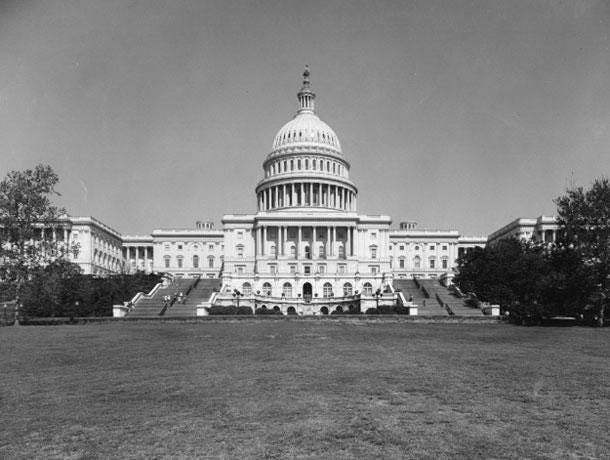
The Associated Press has projected Democratic control of both chambers of Congress.
Democrats have flipped at least seven Senate seats and more than two dozen House districts, with additional races still being counted. The final size of those majorities is not settled yet, but the outcome is clear.
This is a major change from where we were just yesterday.
And I think the next two months are going to be fascinating.
Republicans still control Congress until the new members take office in January. That gives them a limited window to decide whether they’re going to push legislation through before they lose their majorities.
After January, Democrats will control congressional committees, giving them the authority to launch investigations, call witnesses, and scrutinize the Trump administration.
That could have substantial implications for cryptocurrency, artificial intelligence, technology companies, and the president’s business interests.
Now, I want to be clear about something.
Winning Congress doesn’t mean Democrats can pass whatever they want.
Donald Trump is still president. He still has veto power, and overriding a presidential veto requires two-thirds majorities in both chambers.
But congressional oversight is a different story.
I expect investigations into the administration’s dealings, ethics questions, cryptocurrency regulation, and potentially the relationships between government officials and major technology companies.
Some of that could be legitimate oversight. Some of it could become political theater.
And markets are going to have to figure out how to interpret all of it.
Interestingly, Trump reportedly spoke with Politico’s Dasha Burns during election coverage and expressed a willingness to work with Democrats rather than simply veto everything.
That’s encouraging.
If both sides are willing to negotiate, maybe we can get some productive legislation instead of spending the next two years fighting about everything.
We’ll see.
Sherrod Brown Returns to the Senate, and Ohio Turns Blue
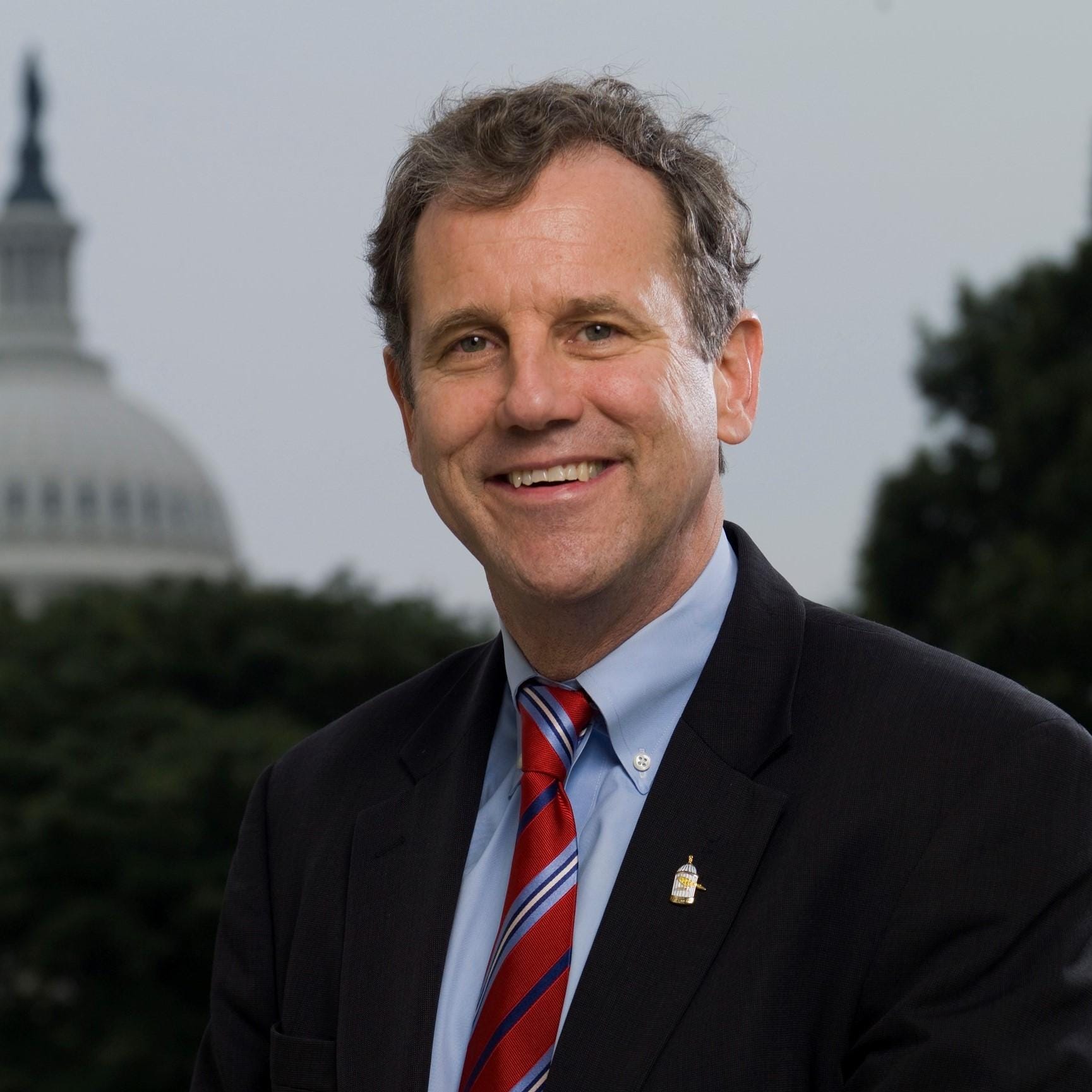
One of the biggest stories for me personally is what’s happened here in Ohio.
Sherrod Brown defeated Republican Senator Jon Husted in the special election to fill the remainder of JD Vance’s Senate term.
Remember, Vance became vice president, and Husted was appointed to replace him. Voters have now chosen Brown to serve out that term.
And this is a significant victory.
Ohio has been a Republican-leaning state in recent presidential elections. Trump carried it comfortably in 2024.
Yet Democrats won major statewide races last night, including the governor’s race.
The cryptocurrency industry also spent heavily trying to defeat Brown. I saw an estimate of around $63 million associated with efforts opposing him, although the precise total depends on which organizations and spending categories are included.
Brown has historically favored stricter financial oversight and investor protections, so his return could strengthen demands for tougher cryptocurrency exchange regulation.
But that doesn’t mean we know how the Senate will vote on any particular bill.
And that’s an important distinction.
What I find more interesting is what these results say about the electorate.
This wasn’t just a small shift in a competitive district. Ohio voters were willing to elect Democrats to major offices in a state that Trump won by a substantial margin.
That’s a pretty significant political statement.
Texas Elects James Talarico and Gina Hinojosa. What Happens to AI and Bitcoin Mining?
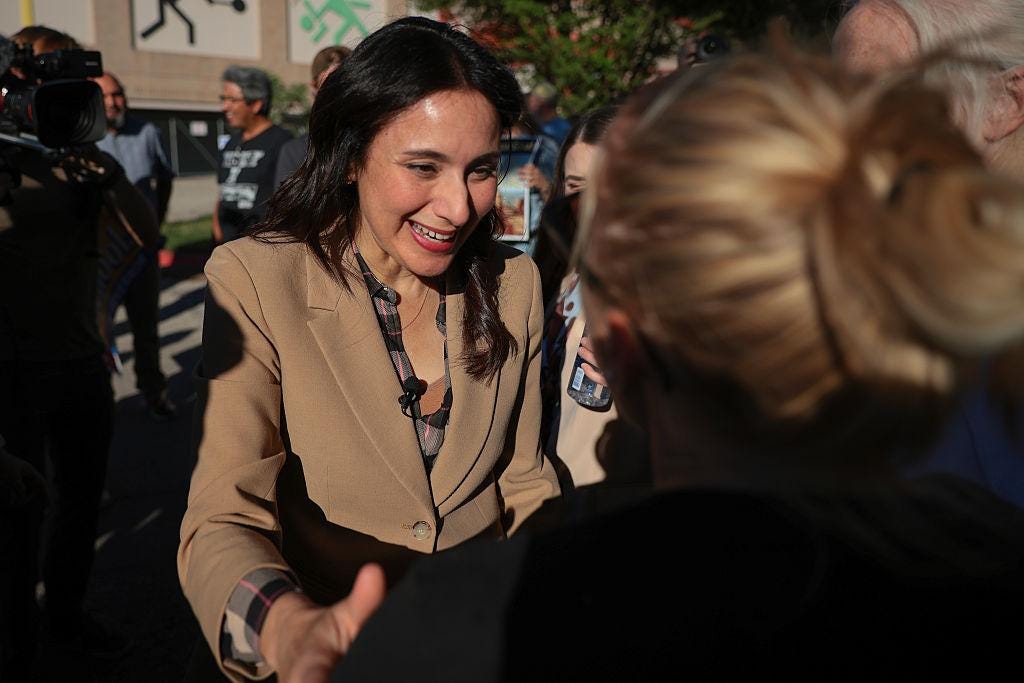
Texas delivered another enormous surprise.
Democrat James Talarico defeated Republican Ken Paxton in the U.S. Senate race, while Gina Hinojosa defeated incumbent Governor Greg Abbott.
Think about what that means.
Texas has been one of the most important states for Republican politics, but it’s also become one of the most important states for cryptocurrency mining, artificial intelligence, and data-center development.
You’ve got enormous technology companies investing in energy-intensive infrastructure. Nvidia, Microsoft, Google, and other companies have substantial interests in how Texas handles electricity, industrial development, and computing capacity.
So now we’re going to have a new governor with a different political mandate.
Does Texas change how it approaches data-center permitting?
Do we see new requirements around electricity consumption or infrastructure costs?
Could there be additional restrictions on development?
I don’t know.
And it’s important to remember that the governor doesn’t control all of those decisions alone. The state legislature and regulatory agencies will have substantial influence.
But Texas has been one of the places where technology companies could invest enormous amounts of money and build major facilities.
Any change in that environment could have consequences well beyond the state.
That’s why I think the Texas results matter to cryptocurrency and AI, not simply to national politics.
The CLARITY Act Faces an Uncertain Future

One of the biggest legislative questions for cryptocurrency is what happens to the CLARITY Act.
The proposed legislation is intended to establish clearer federal rules for cryptocurrency markets and determine how different digital assets are regulated.
The industry has spent years asking Washington to provide a more predictable framework.
But the legislation was already facing obstacles in the Senate before the election.
Now we’re looking at an entirely different political situation.
Republicans have approximately two months before Democrats take control of Congress.
Could they try to advance the legislation during that period?
Possibly.
Will they succeed?
I wouldn’t count on it.
And if the bill doesn’t pass before January, the incoming Congress could substantially change the negotiating environment.
There’s also a broader question about what Republicans might try to accomplish during the remaining weeks of their congressional majorities.
We could see attempts to move other legislation or secure appointments before the balance of power changes.
The next two months might be considerably more active than people expect.
For cryptocurrency companies, the immediate concern is whether regulatory clarity gets delayed even further.
And for investors, uncertainty over the rules is rarely helpful.
Crypto Spent Millions on the Election. Did It Actually Matter?
Here’s something else I find fascinating.
According to the spending figure discussed in today’s episode, cryptocurrency-backed political organizations spent roughly $176 million across more than 100 midterm races.
Coinbase, Ripple, and other major industry participants have supported the Fairshake political network, which backs candidates from both parties.
And after all that spending, look at what happened.
Sherrod Brown won in Ohio. James Talarico won in Texas. Democrats took control of Congress.
Money didn’t guarantee the outcome.
I’ve been thinking about this for a while, and I believe there’s a point of diminishing returns when it comes to political spending.
Think about the mailers you receive during an election.
I don’t know about your area, but here in Ohio we were getting stacks of them.
At some point, how much more persuasion are you getting from another mailer?
You’ve already seen the candidate’s name a hundred times. You’ve seen the television advertisements. You’ve heard the arguments.
Does spending another $10 million actually change anything?
I think there’s a point on that curve where spending more money stops producing a meaningful return.
And I think we see something similar in professional sports.
Look at baseball. Teams like the Los Angeles Dodgers can spend extraordinary amounts of money on players, while smaller-market teams like the Cleveland Guardians, Milwaukee Brewers, and Tampa Bay Rays operate with much smaller payrolls.
Yet smaller-market teams can still compete and make the playoffs.
Money matters. Of course it does.
But it doesn’t guarantee success.
I think this election demonstrated something similar.
When voters are unhappy with the direction of the country, there’s only so much advertising money can accomplish.
And that’s worth thinking about the next time we have a conversation about getting money out of politics.
Bitcoin Recovers After Election Night, but ETF Outflows Remain a Concern
Let’s get back to the markets.
Bitcoin fell toward $75,000 during election night, then recovered to approximately $78,100 by the time I recorded this morning’s show.
That’s a pretty substantial recovery.
It doesn’t mean the election had no effect, but it does suggest the market absorbed the initial political news without sustained selling.
We also have to remember that Bitcoin is dealing with several other pressures.
The Binance security breach is still fresh. Investors remain uncertain about interest rates. And spot Bitcoin ETFs have experienced approximately $1.2 billion in net outflows over the past three trading sessions.
That’s a lot of money leaving those products.
What I want to see today is whether that trend reverses.
Do institutional investors begin buying again now that the election results are clearer?
Or do we see another day of withdrawals?
I’m also watching whether Bitcoin can hold around $78,000 and whether the broader market begins reacting to specific policy announcements rather than simply the election results themselves.
There’s a difference between political uncertainty and actual regulatory changes.
We haven’t seen the new Congress do anything yet.
For now, we’re watching how investors position themselves for what they think is coming.
AI and Cryptocurrency Security Could Become a Major Congressional Issue
Another area I’m watching is cybersecurity.
The Binance hack and other recent exchange security incidents have raised serious questions about how centralized cryptocurrency companies protect customer assets.
We’re talking about employee access, internal security controls, transaction monitoring, and how quickly companies can respond when something goes wrong.
At the same time, artificial intelligence is making it easier for security researchers to discover vulnerabilities in complicated software.
That’s potentially good news for defenders.
But those same capabilities could also help attackers.
One of our contributors, Inspirator, has suggested that we’re going through a period where new technology is exposing weaknesses in older systems.
His argument is that major security incidents could eventually force companies to rebuild their defenses using better tools, including AI.
And I can see the logic.
We’ve got old infrastructure and increasingly powerful technology capable of finding its weaknesses.
Eventually, those tools could also be used to strengthen systems and prevent attacks that are possible today.
Now, I wouldn’t go so far as to say cyberattacks are going to disappear.
But I do think the defensive side of cybersecurity could improve substantially as these technologies mature.
And with Democrats preparing to control congressional committees, I wouldn’t be surprised to see additional hearings about both cryptocurrency security and artificial intelligence.
My Take
I’m shocked by the size of this Democratic victory.
I expected Democrats to win the House. I didn’t expect them to pick up this many Senate seats, and I certainly didn’t expect the scale of the results in Ohio and Texas.
I made some predictions yesterday, and I got smoked.
At this point, you can probably call me the Jim Cramer of political predictions.
I was watching election predictions before the results came in, and most people were discussing relatively narrow Democratic gains in the Senate.
Then Ryan Grim came out suggesting Democrats could win somewhere around 55 to 57 seats.
I thought that was crazy.
Well, he was a lot closer to what happened than I was.
But here’s what matters now.
What are Democrats going to do with this victory?
And perhaps more importantly, why did people vote for them?
Was this an endorsement of the Democratic Party and its platform?
Or was it a protest against Donald Trump and what voters believe his administration has failed to deliver?
Those are two very different things.
A friend texted me last night describing the results as consequences for what he called the largest betrayal in political history. He was talking about the difference between Trump’s campaign promises and what has happened during his presidency.
I think that sentiment helps explain some of what we’re seeing.
But Democrats still have to decide what they’re going to offer the country.
There’s one argument that says the party should move toward the center, embrace the kind of broad coalition associated with Bill Clinton, focus on fiscal responsibility, and pursue practical policies that appeal to more voters.
There’s another argument that says people voted Democratic because they want stronger progressive policies, healthcare protections, changes to immigration enforcement, an end to the wars, and a more aggressive response to what they see happening in the country.
Which interpretation is correct?
I don’t think we know yet.
And I don’t think Democrats should automatically assume that every vote against Trump was a vote for everything in their platform.
Now the responsibility is on them to demonstrate what they can accomplish.
As for cryptocurrency, I’m still optimistic about emerging technology. I want to see innovation flourish, companies build extraordinary things, and America remain a place where people can take risks and create something new.
I don’t particularly care whether your team won or lost last night.
I want the best outcome for the country.
We’ll keep watching the markets, the final election results, and what both parties say about cryptocurrency regulation over the coming weeks.
Thanks for listening, everybody.