


Monday, November 9, 2026 | Daily Crypto News with Matt Diemer
Bitcoin is struggling to hold $75,000, more than $1 billion in leveraged cryptocurrency positions were reportedly liquidated over the weekend, and institutional investors continue pulling money from Bitcoin ETFs.
Meanwhile, Nvidia CEO Jensen Huang is facing an extraordinary investigation involving allegations of Chinese intelligence activity, raising questions about national security, America’s AI infrastructure, and the stability of one of the world’s most important technology companies.
And it’s Monday, which means Craig Cobb joins us for his weekly Bitcoin technical analysis.
1. Bitcoin Slides Toward $74,000 as More Than $1 Billion in Crypto Positions Are Liquidated

Bitcoin fell toward $73,000 before recovering to approximately $74,850 Monday morning.
Weekend volatility reportedly triggered more than $1 billion in leveraged cryptocurrency liquidations, including approximately $913 million in bullish positions.
Traders betting on a recovery were caught on the wrong side of the market.
Meanwhile, Bitcoin ETFs reportedly recorded $1.28 billion in net outflows over the previous week.
That’s an enormous amount of institutional money leaving the market.
I’m watching whether Bitcoin can establish support around $74,000. We’ve seen repeated attempts to recover, followed by additional selling.
The question isn’t whether Bitcoin can bounce for a few hours. It’s whether buyers can establish a sustainable recovery.
2. Craig Cobb’s Bitcoin Analysis: Have We Already Seen the Bottom?

Monday Market Update with Craig Cobb | The Grow Me Co
Craig Cobb joins Daily Crypto News with a detailed look at Bitcoin’s technical structure, and despite recent weakness, he’s identifying some potentially encouraging longer-term developments.
Craig says the daily chart remains messy, while five consecutive weeks of selling have produced a roughly 15% pullback.
The weekly uptrend has broken down, and the monthly chart has not yet established a new uptrend.
But the three-month chart is telling a more interesting story.
Historically, Craig has observed that bullish three-month candles forming around his preferred moving averages have sometimes preceded major Bitcoin recoveries.
He believes there’s a meaningful possibility that Bitcoin has already established its cycle low, although he emphasizes that confirmation is still needed.
A break above the relevant three-month candle’s high would be significant. A monthly higher low followed by a higher high could establish a new uptrend.
Craig is also watching approximately $74,000, a historical support-and-resistance area dating back to Bitcoin’s breakout following the 2024 election.
He cautions that Bitcoin could still experience deeper declines, potentially toward $60,000, before a sustained recovery develops.
His message is patience. The bigger-picture setup may be improving, but the market still needs to confirm it.
Follow Craig Cobb:
Free newsletter and trading education: The Grow Me Co
X: @TraderCobb
3. Nvidia Investigates Jensen Huang Over Alleged Chinese Intelligence Operation

Nvidia’s board has launched an independent investigation following reports that CEO Jensen Huang was targeted by a suspected Chinese intelligence operation.
Huang acknowledged being unfaithful to his wife, while reports identified Alice Huang, a former executive at Singapore-based Megaspeed, as the woman at the center of the allegations.
U.S. officials have reportedly examined whether she collected information for Beijing.
Nvidia says it currently has no reason to believe national security or company secrets were compromised. Huang remains CEO while the investigation proceeds.
But here’s my concern.
Everybody wants to turn this into a celebrity cheating scandal. I couldn’t care less about Jensen Huang’s personal life.
We’re talking about the CEO of a company at the center of America’s artificial intelligence infrastructure.
If foreign intelligence gained access to sensitive technology, business strategy, or export-controlled information, that’s a national security issue.
The question isn’t who Jensen Huang slept with. It’s whether American technology was compromised.
That hasn’t been established, and the investigation needs to determine what actually happened.
4. Nvidia’s Leadership Crisis Adds Pressure to the AI Economy
Nvidia shares were reportedly down approximately 5% in premarket trading Monday as investors reacted to the investigation involving Jensen Huang.
The company’s extraordinary valuation reflects its central position in AI computing, advanced chips, and global data-center construction.
Huang has been instrumental in building that business, which makes uncertainty surrounding his leadership especially consequential.
There has been speculation about his future, but Nvidia says he will continue serving as CEO.
I’ve been warning about the financial risks surrounding the AI infrastructure boom.
A major technology correction doesn’t just hurt billionaires. It affects retirement accounts, construction jobs, suppliers, energy companies, and ordinary workers.
People cheering for an AI collapse because they dislike Trump or wealthy technology executives should consider who gets hurt first.
It’s usually the people with the least financial cushion.
We can investigate corruption, protect national security, and hold executives accountable without rooting for an economic catastrophe.
5. Polymarket Election Bets Face Insider-Trading Questions

A New York Times investigation raised questions about whether a trader who placed unusually profitable bets on Senate election outcomes had access to information before polling results became public.
The Block’s independent blockchain analysis reportedly found that the trader had previously taken similarly large speculative positions.
Polymarket is reportedly investigating the activity.
This raises an interesting question about prediction markets.
If someone working for a media organization, polling firm, or election-data provider learns important information before the public, could they exploit that advantage on a prediction platform?
Potentially.
But unusual profits alone don’t establish insider trading.
The more important issue is whether these markets need clearer rules governing confidential information and trading activity.
Prediction markets increasingly resemble sophisticated financial products, even when their underlying events are elections or political developments.
6. U.S. Treasury Moves to Cut Off MEXC Over $16 Billion in Alleged Illicit Transactions

The Treasury Department’s Financial Crimes Enforcement Network announced action Friday to effectively cut cryptocurrency exchange MEXC Global off from the American financial system.
FinCEN alleges that the exchange facilitated at least $16 billion in illicit transactions connected to sanctions evasion and cybercrime.
The allegations involve activity associated with Iran, North Korea, and Russia.
The order would prevent U.S. financial institutions from processing covered transfers involving MEXC.
This is a significant enforcement action against a major cryptocurrency trading platform.
It also demonstrates that cryptocurrency regulation isn’t simply about whether Bitcoin is a security or commodity.
Financial institutions operating internationally still face substantial obligations involving sanctions, money laundering, and illicit finance.
7. Polymarket Reports Security Breach Involving Third-Party Software
Polymarket’s international platform reportedly experienced a security incident involving a compromised third-party monitoring service.
According to the episode’s reporting, attackers used malicious software to exploit authenticated trading sessions, with approximately $2.5 million in cryptocurrency traced to the incident.
Polymarket reportedly resumed trading and pledged to reimburse affected users.
The important distinction is that the reported attack targeted connected infrastructure and authenticated sessions rather than demonstrating a vulnerability in the underlying blockchain.
We’ve discussed this problem repeatedly.
A blockchain can operate exactly as designed while the applications, credentials, and services surrounding it remain vulnerable.
Security is only as strong as the weakest connected system.
8. Wall Street and Crypto Exchanges Clash Over Perpetual Futures

Traditional financial institutions and cryptocurrency exchanges are increasingly competing over perpetual futures, a trading product that allows investors to maintain leveraged exposure without a conventional expiration date.
Perpetual futures have become enormously important in cryptocurrency markets.
Now established financial firms are seeking opportunities in products that crypto-native exchanges helped popularize.
The potential conflict involves market structure, regulation, access, and who ultimately controls this increasingly lucrative business.
For traders, the bigger issue is how these products are supervised and whether stronger competition improves transparency and risk management.
The weekend’s enormous liquidation figures demonstrate just how quickly leveraged trading can amplify market volatility.
9. Tuesday’s Inflation Report Could Determine the Market’s Next Move
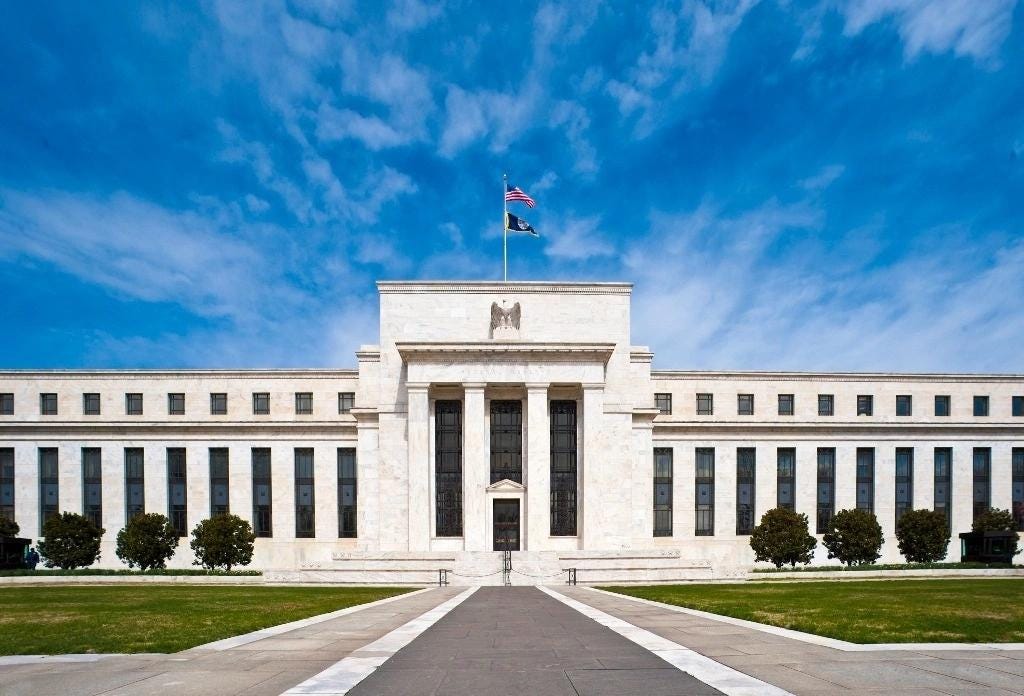
Investors are preparing for Tuesday’s consumer inflation report, which could influence expectations for Federal Reserve policy in December.
Monday’s early market indicators suggested a potential recovery in major U.S. stock indexes, even as Nvidia remained under pressure.
The 10-year Treasury yield was around 4.85% at the time of recording, while gold was modestly higher and crude oil was weaker.
For cryptocurrency investors, the combination of inflation, interest-rate expectations, institutional ETF flows, and technology-stock performance remains critical.
I’m watching whether Bitcoin can stabilize, whether AI stocks can continue recovering, and whether the market can absorb the Nvidia investigation without another broad sell-off.
Cryptocurrency Market Snapshot
Prices and 24-hour changes at the time of recording.
Bitcoin (BTC): $74,850 | 🔴 -1.4%
Ethereum (ETH): $2,122 | 🔴 -5.2%
BNB: $686 | 🔴 -1.8%
XRP: $1.10 | 🔴 -5.0%
Solana (SOL): $86.59 | 🔴 -3.3%
TRON (TRX): $0.317 | 🔴 Approximately -1.0%
Zcash (ZEC): $1,220 | 🔴 -3.9%
Hyperliquid (HYPE): $73.74 | 🔴 -4.8%
Overall Market Indicators
Total Crypto Market Cap: $2.49 trillion | 🔴 -1.8%
Fear & Greed Index: 28 | Fear
Bitcoin remains down approximately 3.6% over the past seven days.
The critical levels to watch are Bitcoin’s support around $74,000, the possibility of deeper selling, and whether institutional ETF outflows begin reversing.
Beyond crypto, Nvidia’s investigation and Tuesday’s inflation data could significantly influence market sentiment.