


Daily Crypto News | Friday, October 30, 2026
Good morning, everybody. Welcome to Daily Crypto News. My name is Matt.
Before we get started, a quick shout-out to @that_caitlin, who left a Spotify comment saying she listens on her morning drive to work and enjoys the blend of news and rants.
Thank you, Caitlin. Much love.
Now, let’s talk about what happened yesterday, because it was absolutely wild.
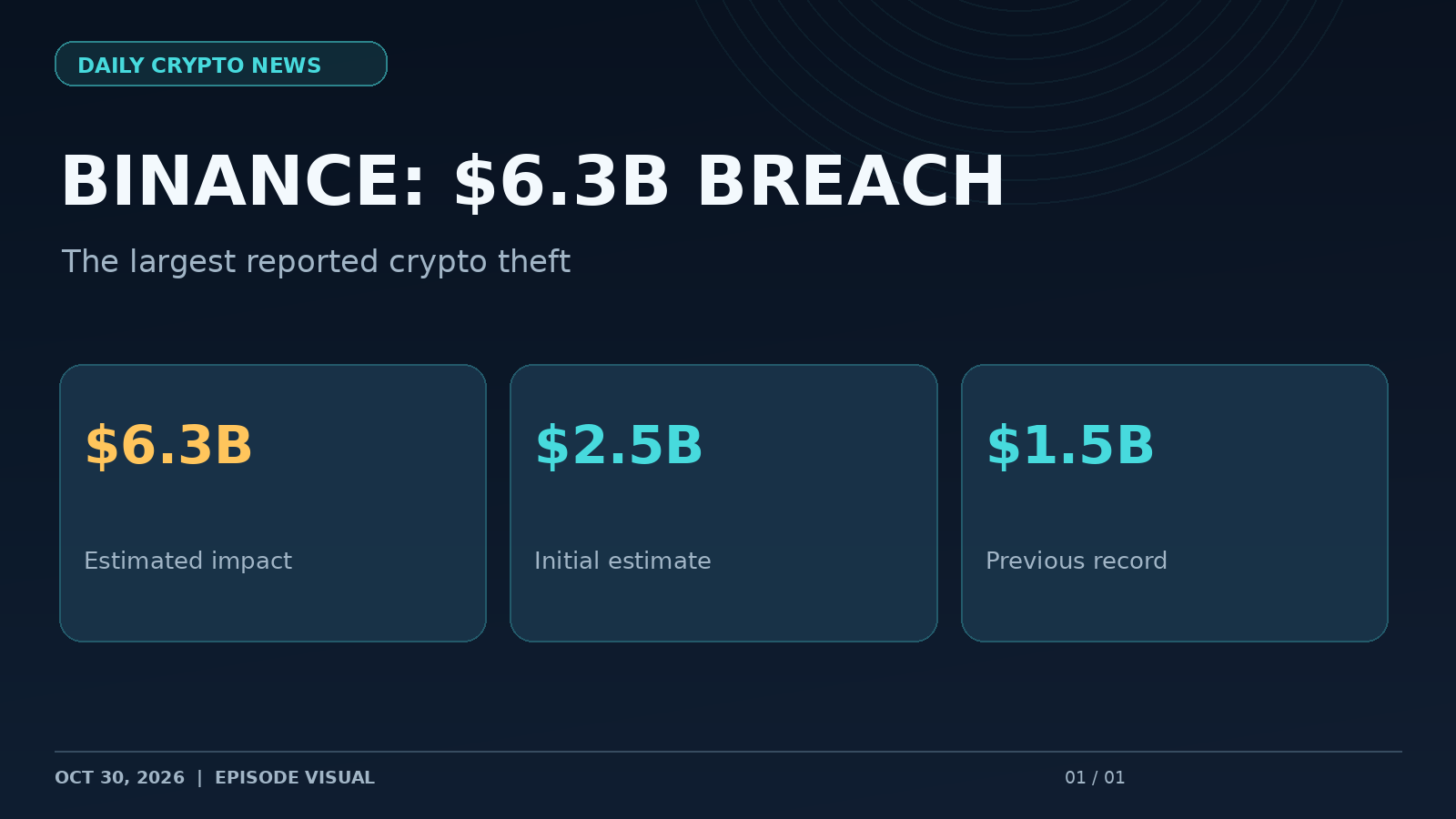
Binance, the world’s largest cryptocurrency exchange, suffered a security breach with an estimated impact of $6.3 billion.
That’s billion with a B.
We’re talking about what appears to be the largest cryptocurrency theft in history. And what really surprises me is how well Bitcoin has held up considering the magnitude of what just happened.
━━━━━━━━━━━━━━━━━━━━━━━━━━━━━━━━
How the Binance Hack Unfolded
I was doomscrolling X yesterday afternoon when I started seeing complaints from Binance customers.
People were saying their account balances weren’t displaying correctly. They were asking Binance what was happening, and the company was looking into it.
Then reports of suspicious transfers began circulating.
The first estimate I saw was approximately $2.5 billion.
Then $5.6 billion.
And now Binance itself estimates the total impact at approximately $6.3 billion.
That’s how these investigations often unfold. Analysts discover additional transactions, wallets, and assets as they reconstruct what happened.
Blockchain investigators have traced the activity across multiple networks, with a large portion of the transfers occurring within approximately 20 minutes.
To put this into perspective, the previous record cryptocurrency theft was the roughly $1.5 billion Bybit hack in February 2025.
This incident is more than four times that size.
And remember, when we’re talking about billions of dollars, even a change of 0.1 billion represents another $100 million.
━━━━━━━━━━━━━━━━━━━━━━━━━━━━━━━━
Approximately $3 Billion Has Been Frozen
Here’s the encouraging part.
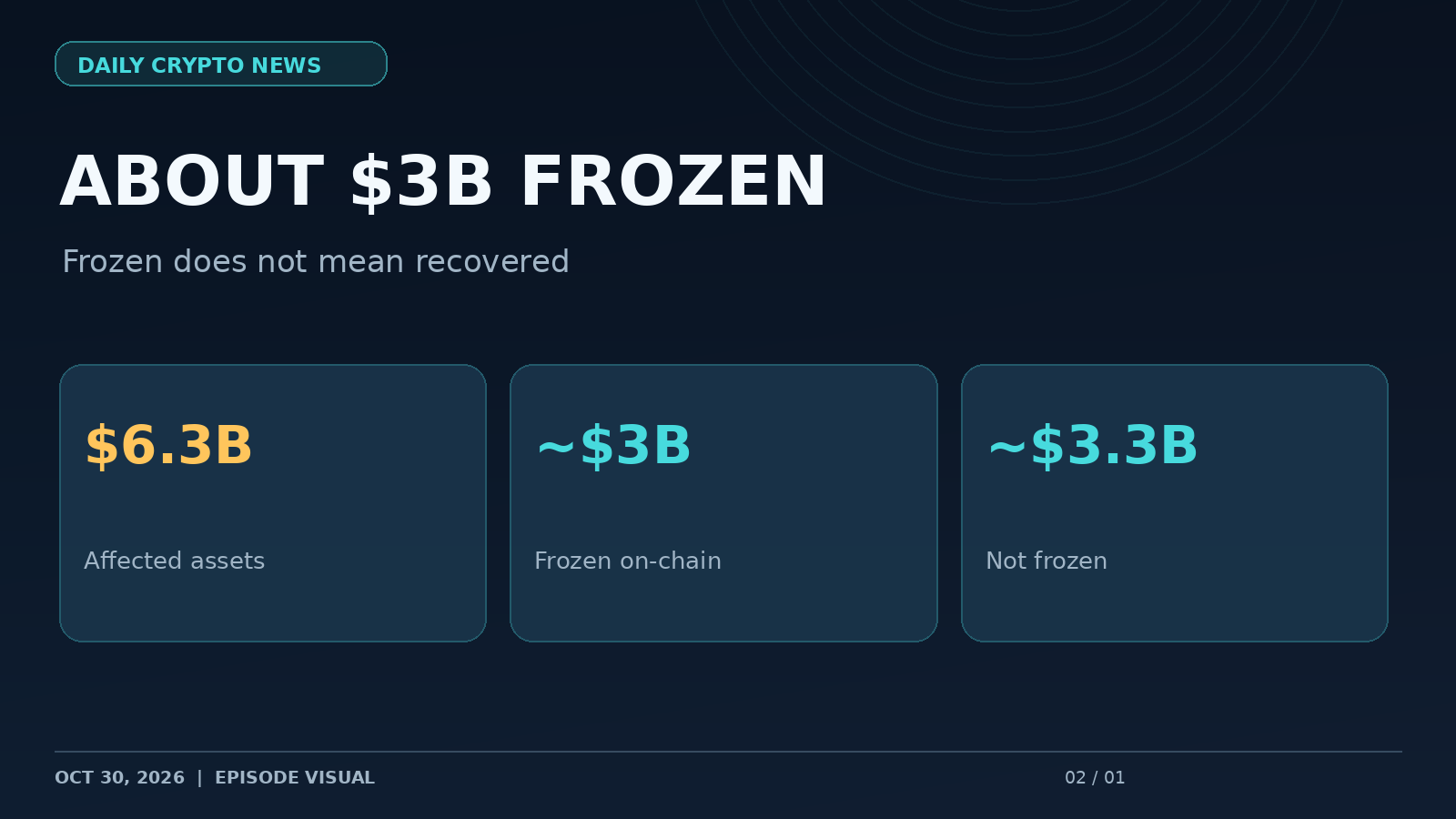
Binance says it has worked with blockchain partners to freeze approximately $3 billion in affected cryptocurrency.
A significant portion involved centrally issued stablecoins, including Tether’s USDT and Circle’s USDC.
Because these tokens are administered by companies with certain issuer-level controls, their issuers can restrict transfers involving designated addresses.
That is a powerful tool during a theft.
But it’s important to distinguish between freezing funds and actually recovering them.
Frozen cryptocurrency hasn’t necessarily been returned to Binance yet. Investigators still need to establish ownership, coordinate with issuers, and complete the appropriate recovery process.
Bitcoin and native Ethereum work differently.
There isn’t a central issuer that can simply blacklist ordinary Bitcoin or ETH balances.
Investigators can track transactions, identify wallets, and work with exchanges and law enforcement. But they can’t simply order the Bitcoin network to reverse a transaction.
And mixing services can make tracing more complicated, although using a mixer doesn’t automatically make stolen funds impossible to follow.
So here’s the situation: Binance estimates $6.3 billion was affected, and approximately $3 billion has been frozen.
That leaves roughly $3.3 billion not covered by the reported freezes.
The final recoverable amount remains uncertain.
━━━━━━━━━━━━━━━━━━━━━━━━━━━━━━━━
Can Binance Afford to Make Everybody Whole?
This is the question I was asking during yesterday’s emergency live stream.
Where does Binance find billions of dollars to replace stolen assets?
The company has its Secure Asset Fund for Users, better known as SAFU.
It’s an emergency reserve intended to protect customers during major security incidents.
The fund has been described as holding approximately $1 billion.
So let’s do some back-of-the-napkin math.
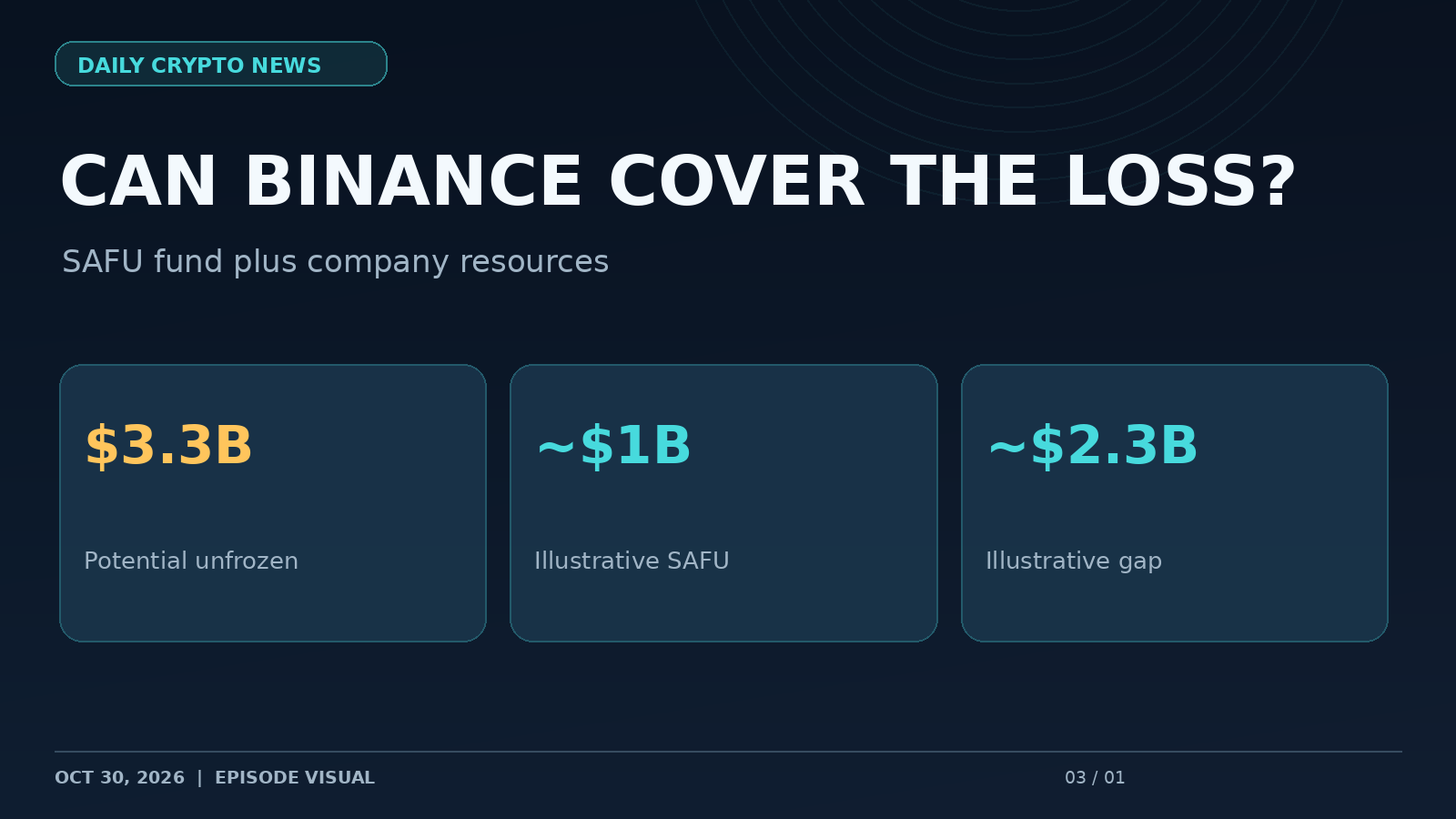
Estimated breach: $6.3 billion
Assets reportedly frozen: approximately $3 billion
Remaining exposure before recoveries: approximately $3.3 billion
Illustrative SAFU reserve: approximately $1 billion
Potential remaining funding requirement: approximately $2.3 billion
Now, that’s not an audited calculation of Binance’s actual loss.
It assumes the frozen funds are ultimately recoverable and that the full reserve can be used. Neither outcome should be taken for granted.
But it illustrates why Binance may need company resources beyond its emergency fund.
And that’s exactly what the exchange has promised.
Binance says it will cover all losses using the SAFU fund and company funds, and that user balances are safe.
CZ, who no longer manages Binance’s daily operations, has also been communicating publicly as a shareholder.
He says the situation will be painful but manageable.
That’s encouraging.
However, I still want to see the updated proof of reserves, the actual recovery figures, and a detailed explanation of how Binance plans to replenish the affected assets.
A promise is important. Following through is what matters.
━━━━━━━━━━━━━━━━━━━━━━━━━━━━━━━━
Investigators Trace the Attack to a Compromised Laptop
Now we get to the part that should concern every cryptocurrency exchange.
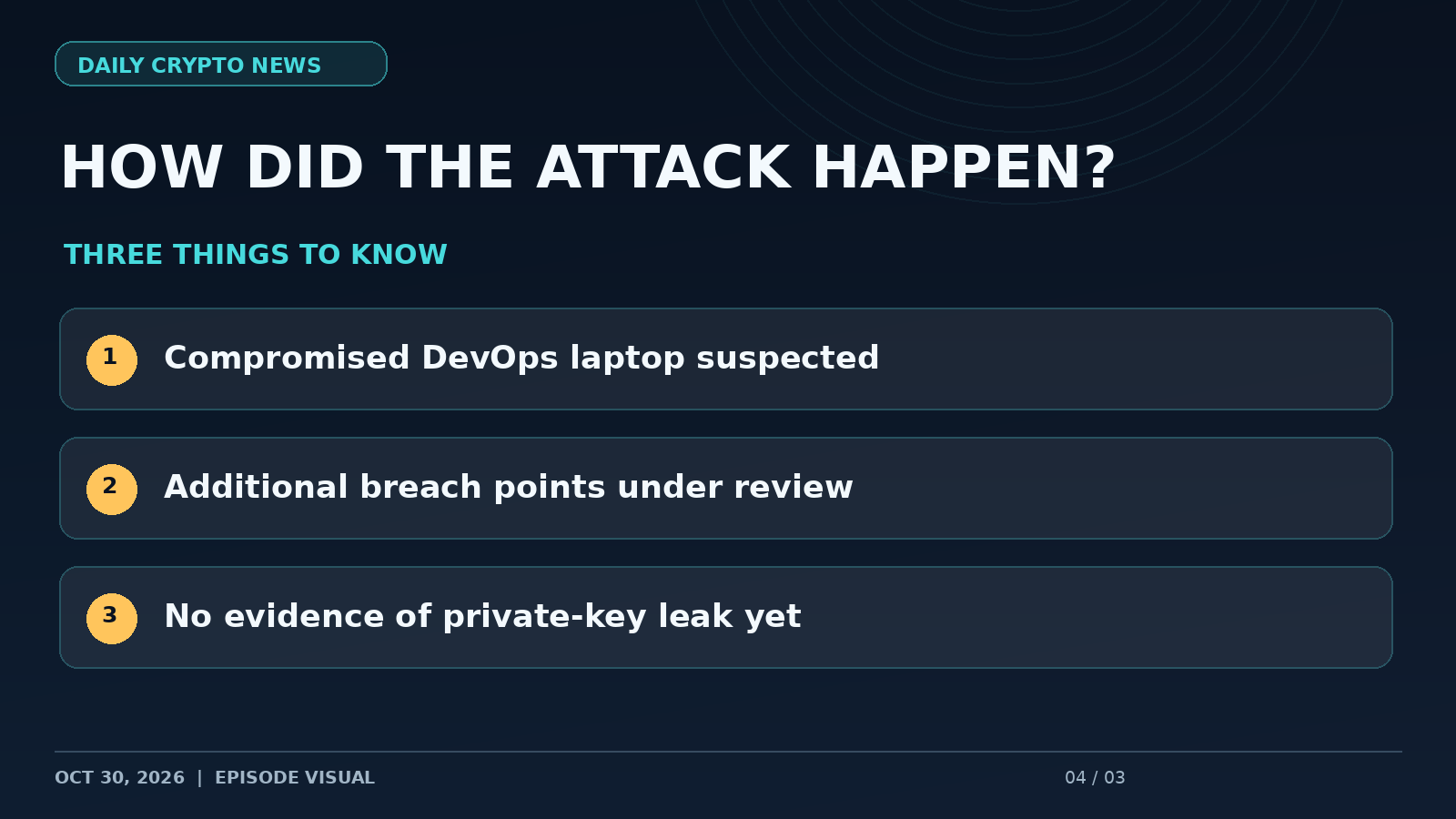
Binance’s preliminary investigation suggests the attackers may have gained access through a compromised laptop belonging to a DevOps engineer.
That access reportedly allowed them to reach internal infrastructure and submit unauthorized withdrawal transactions.
Think about that.
We’re discussing billions of dollars in cryptocurrency, and one of the suspected entry points is an employee’s laptop.
Binance says it has found no evidence that wallet private keys were stolen.
Co-CEO Richard Teng has also indicated that investigators uncovered additional points of compromise and that this was more complex than one employee approving malicious transactions.
The full technical explanation hasn’t been released.
And that’s important because we shouldn’t assume the laptop alone explains everything.
Investigators still need to determine how attackers bypassed transaction controls, what systems were compromised, and why unauthorized withdrawals were approved.
It also brings us back to something we’ve been discussing for weeks: artificial intelligence and cybersecurity.
AI tools are making it easier to analyze code and identify vulnerabilities. Legitimate security researchers benefit from that, but attackers may benefit too.
Elon Musk recently posted that every day is becoming a zero-day.
It’s a provocative way of describing a real concern: software vulnerabilities are becoming a more urgent part of everyday life.
But there is no confirmed evidence that AI was responsible for the Binance breach.
That distinction matters.
━━━━━━━━━━━━━━━━━━━━━━━━━━━━━━━━
Is North Korea Behind the Attack?
Blockchain intelligence firms, including TRM Labs, have identified similarities between this attack and previous operations attributed to North Korean hacking groups.
One group receiving particular attention is TraderTraitor, which has been linked to earlier major cryptocurrency thefts.
North Korean hackers were also blamed for the Bybit attack in 2025.
And if investigators establish that the same network was involved here, this would represent an extraordinary escalation in the scale of cryptocurrency theft.
But as of this morning, Binance has not publicly established who carried out the attack.
So the North Korea connection remains an attribution by security researchers, not a final finding from the exchange.
And the idea that the attackers used AI is a separate, unconfirmed theory.
━━━━━━━━━━━━━━━━━━━━━━━━━━━━━━━━
CZ, Elon Musk, and the Billionaire Back-and-Forth
Of course, this is cryptocurrency, so even a multibillion-dollar security crisis comes with drama on X.
Elon Musk weighed in with posts about zero-day vulnerabilities, and CZ pushed back against what he viewed as inappropriate trolling during a serious incident.
CZ also referred to Binance’s investment associated with Musk’s Twitter acquisition and suggested that the value of its SpaceX-related holdings could help illustrate the company’s financial resources.
It’s an interesting exchange.
But the more important issue isn’t which billionaire wins an argument online.
It’s whether Binance has enough accessible capital to honor its obligations to customers.
Owning valuable investments is not the same as having immediately available cash.
If Binance needs to replace large amounts of cryptocurrency, it may have to use reserves, liquid assets, and over-the-counter transactions.
And that process could take time.
━━━━━━━━━━━━━━━━━━━━━━━━━━━━━━━━
Polymarket Was Hit by a Separate Security Incident
Binance wasn’t the only major cryptocurrency business dealing with a breach yesterday.
Polymarket temporarily suspended trading on its international platform after a third-party provider was compromised.
Blockchain investigators estimated approximately $2.7 million was taken from hundreds of user accounts.
Polymarket said it identified and fixed the issue, resumed trading, and would reimburse affected users.
The company has not independently confirmed every figure circulating about the losses.
But the broader concern is obvious.
These platforms don’t operate in isolation.
They rely on third-party software, cloud infrastructure, authentication systems, and service providers.
And sometimes the weak point isn’t the blockchain itself.
It’s something connected to it.
━━━━━━━━━━━━━━━━━━━━━━━━━━━━━━━━
What Happens if Coinbase, Kraken, or Gemini Gets Hacked?
Here’s the question I’ve been asking.
We know Binance has SAFU.
But what happens if another major exchange experiences a multibillion-dollar breach?
Coinbase offers eligible Coinbase One members account protection of up to $250,000 for certain unauthorized account takeovers, subject to eligibility requirements and exclusions.
That’s not blanket insurance for every customer or every kind of loss.
And cryptocurrency held at an exchange generally isn’t covered by FDIC deposit insurance simply because the exchange operates in the United States.
So what would happen to customers if a major exchange lost billions from its own infrastructure?
Would the company reimburse everybody?
Would it have enough liquid reserves?
How would customer obligations interact with the interests of shareholders?
And how would regulators respond?
I don’t know the answers for every exchange, and I don’t think customers should assume all platforms offer identical protections.
That’s why I want to see more transparency about custody, insurance, emergency reserves, and reimbursement policies throughout the industry.
━━━━━━━━━━━━━━━━━━━━━━━━━━━━━━━━
Bitcoin Falls Toward $76,000 but Shows Surprising Resilience
Now let’s talk about Bitcoin.
Before the Binance news, we were trading around $80,000 to $81,000.
As the breach became public, Bitcoin dropped toward $76,000.
But it didn’t collapse.
During this morning’s recording, Bitcoin was trading around $77,300, down approximately 3.4% over 24 hours.
And according to the figures discussed on today’s show, Bitcoin ETFs still recorded approximately $17 million in net inflows yesterday.
That’s remarkable to me.
Imagine a $6.3 billion exchange hack happening in 2017.
The panic would have been extraordinary.
Today’s cryptocurrency market is much larger, with institutional investors, publicly traded companies, regulated investment products, and more developed infrastructure.
That doesn’t make it immune to a crisis.
But it may help explain why the market has absorbed this news without a complete breakdown.
Here’s how I think about the price action.
You have the normal market forces: supply and demand, interest rates, liquidity, the dollar, institutional buying, and economic conditions.
Then you have extraordinary events that create sudden fear or excitement.
A massive exchange hack can temporarily overwhelm ordinary trading behavior.
I sometimes compare that to stretching a rubber band.
The event pushes the price away from where it might otherwise have traded, and the market may eventually snap back.
But that’s an analogy, not a guarantee.
A security crisis can also create lasting damage if it changes investor confidence, exchange liquidity, or the broader financial outlook.
So I wouldn’t automatically assume Bitcoin is headed lower forever because of yesterday’s selloff.
And I wouldn’t automatically assume it’s guaranteed to recover either.
━━━━━━━━━━━━━━━━━━━━━━━━━━━━━━━━
Crypto Prices This Morning
Here’s where the market stood during today’s recording.
Bitcoin: $77,300, down 3.4%
Ethereum: $2,230, down 4%
BNB: $699, down 5.5%
XRP: $1.24, down 3.5%
Solana: $96.43, down 4%
TRON: $0.339, up 2.6%
Hyperliquid: $92.16, up 5.2%
Zcash: $1,250, down 1.8%
Total cryptocurrency market capitalization: approximately $2.6 trillion
Fear & Greed Index: 36, Fear
Those prices are a snapshot from the podcast, not live quotes.
━━━━━━━━━━━━━━━━━━━━━━━━━━━━━━━━
My Take
The first thing I’m watching is Binance’s withdrawal system.
The exchange temporarily suspended deposits and withdrawals while it investigated and secured its infrastructure.
If withdrawals resume smoothly, that’s an encouraging sign.
If customers rush to withdraw their assets, we’ll learn a lot about how well Binance can handle the pressure.
Second, I want updated reserve figures and a clear accounting of how much cryptocurrency has actually been recovered.
Third, I want the technical post-mortem.
Was this primarily a compromised device? A failure in transaction authorization? Multiple internal systems?
And did AI play any role?
Those answers matter to every cryptocurrency business.
Finally, I want people to think seriously about how they store their assets.
Self-custody comes with its own risks, including compromised devices, malicious software, supply-chain issues, and user mistakes.
And this is not the time to panic and start experimenting with unfamiliar wallet tools or moving large amounts of cryptocurrency through processes you don’t understand.
Security decisions should be made carefully, not in the middle of a crisis.
My overall view is that Bitcoin’s reaction has been surprisingly resilient.
That doesn’t make this hack any less serious.
We’re talking about billions of dollars, potentially the largest cryptocurrency theft ever, and a major test of how the industry responds when something goes terribly wrong.
Let’s see whether Binance can make its customers whole and whether the rest of the industry learns from what happened.
My name is Matt.